

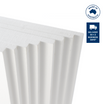
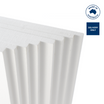
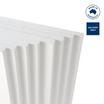
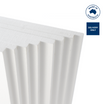
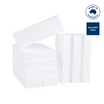
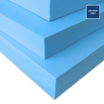
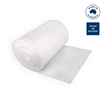
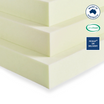
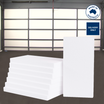

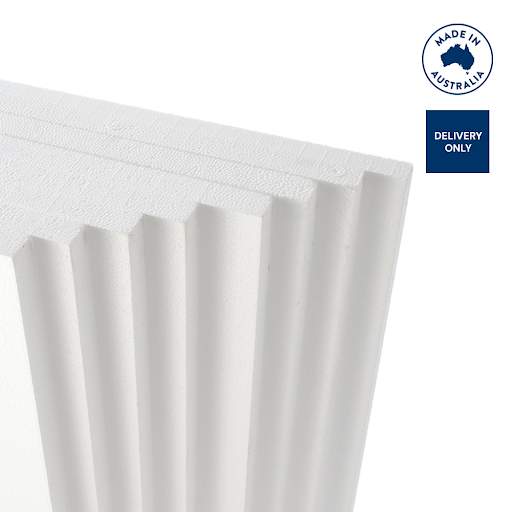
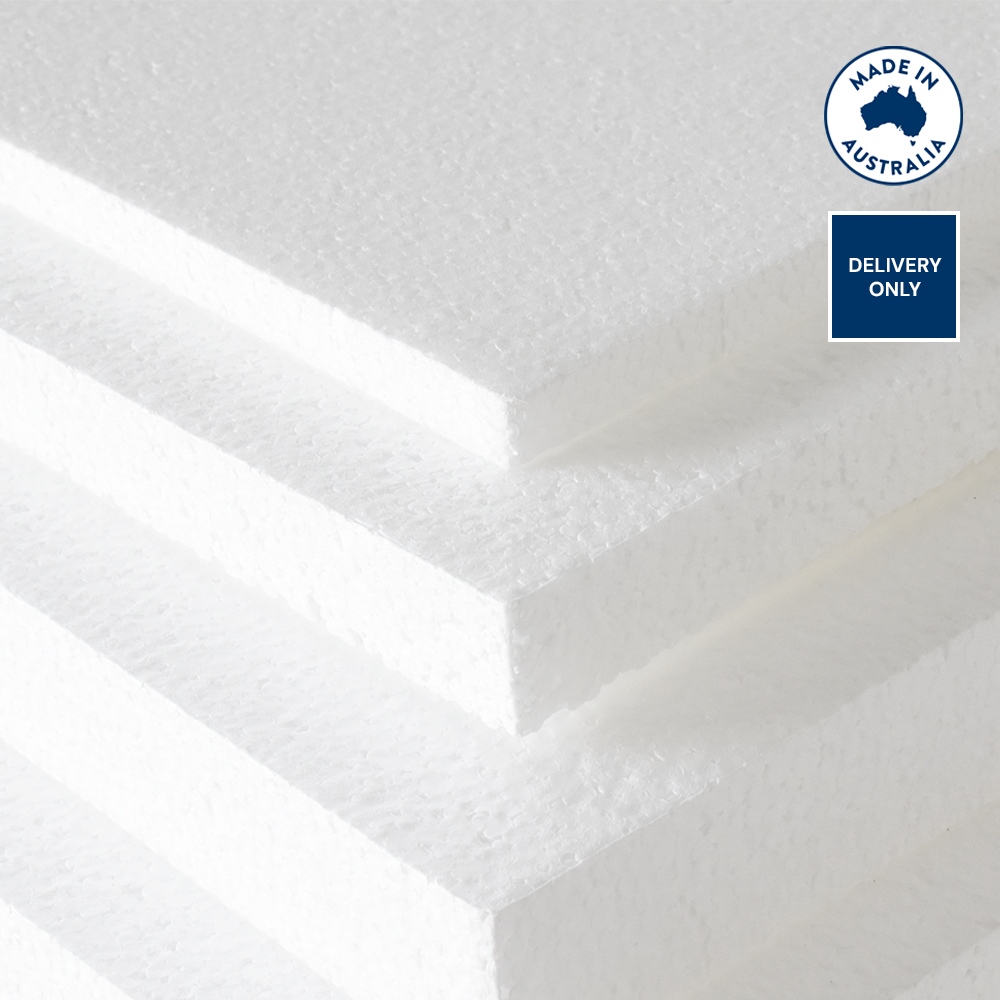
EPS foam is one of Australia's most widely used insulation materials in 2026 and once you understand how it works, it's easy to see why expanded polystyrene (EPS) foam is a rigid, closed-cell insulation material made from small polystyrene beads that are expanded using steam and fused. The result is a lightweight board packed with millions of tiny air pockets and those air pockets are exactly what make it such an effective insulator.
Because air is a poor conductor of heat, locking it inside the foam structure significantly slows heat transfer through walls, roofs, and floors. In Australian conditions, where summers can push past 40°C and winter nights drop sharply, this temperature regulation is critical for comfort and energy efficiency.
How Effective Is EPS for Thermal Insulation?
EPS foam is highly effective when selected and installed correctly. Its thermal performance is measured by its R-value, the higher the R-value, the better the insulation. Here's what you can expect from EPS at common thicknesses:
- 50mm EPS board: approximately R1.4
- 75mm EPS board: approximately R2.1
- 100mm EPS board: approximately R2.8
- 150mm EPS board: approximately R4.2
For context, Australian building standards (NCC 2022) recommend a minimum of R2.5 for external walls in most climate zones. EPS at 100mm comfortably meets this threshold, making it a viable choice for both new builds and retrofits.
How Does EPS Compare to Other Insulation Materials?
Before choosing any insulation, it's worth understanding how EPS stacks up against the alternatives:
|
Material |
R-Value (100mm) |
Cost (per m²) |
Moisture Resistance |
|
EPS Foam |
~R2.8 |
$8–$15 |
High |
|
~R3.5 |
$15–$25 |
Very High |
|
|
Fibreglass |
~R2.5 |
$5–$10 |
Low |
|
Polyurethane |
~R4.0+ |
$30–$60 |
Very High |
EPS sits in the middle ground; it outperforms fibreglass in moisture resistance and durability but falls short of polyurethane in thermal efficiency. For most Australian residential projects, EPS delivers the best balance of performance and cost.
Is EPS Foam Suitable for Australian Conditions?
Yes. EPS is particularly well-suited to Australia's varied climate zones. Here's why:
- Coastal regions: EPS resists moisture absorption and does not promote mould growth, making it ideal for humid coastal environments.
- Inland and arid areas: Its closed-cell structure maintains performance even under significant daily temperature swings.
- Tropical north: EPS can be used as part of a composite wall system to manage both heat and humidity effectively.
One important note: EPS must be protected from prolonged UV exposure. Direct sunlight degrades the material over time, so always ensure it is covered with an appropriate cladding, render, or building wrap during and after installation.
Main Advantages of EPS Foam Insulation
- Lightweight and easy to handle: reduces labour time and cost on site
- Cost-effective: typically $8–$15 per m², among the most affordable rigid insulation options
- Low moisture absorption: retains insulation performance over time
- Versatile: available in sheets, blocks, or custom-cut shapes for walls, floors, and roofs
- Long lifespan: properly installed EPS can last 50+ years with minimal degradation
Real-World Example: EPS in a Perth Home
Consider a typical brick-veneer home in Perth. By installing 75mm EPS panels behind the external cladding, homeowners can reduce heat transfer through walls by up to 60% compared to an uninsulated wall. This typically translates to a 20–30% reduction in annual cooling and heating energy costs, a meaningful saving given Western Australia's long, hot summers.
Limitations to Be Aware Of
EPS is not without its drawbacks. Keep these in mind before committing:
- Lower structural strength than denser materials like XPS, not suitable for high-load applications
- Fire performance requires attention; EPS must be covered with compliant building materials in accordance with NCC requirements. look for products with flame-retardant (FR) treatment
- Gaps reduce performance: precise installation is essential; any gaps or thermal bridges will undermine the R-value
- UV sensitive: must not be left exposed to sunlight for extended periods
Is EPS Foam Environmentally Friendly?
EPS has a mixed environmental profile. On the positive side, it dramatically reduces the energy needed to heat and cool buildings over their lifetime, often offsetting the energy used in its production within just a few years of use.
On the negative side, EPS is a plastic-based material that does not biodegrade. However, it is recyclable. In Australia, organisations such as Expanded Polystyrene Australia (EPSA) operate recycling programmes that accept clean EPS waste from construction sites and packaging. Responsible disposal is important.
Final Thoughts
EPS foam is a smart, cost-effective insulation choice for most Australian residential and commercial projects. It delivers reliable thermal performance, handles Australia's diverse climate well, and comes at a price point that suits projects of all scales.
If maximum R-value per millimetre is your priority, polyurethane or XPS may be worth the extra cost. But for the vast majority of applications, EPS hits the sweet spot between efficiency, durability, and affordability.
Planning an insulation upgrade or new build? Get in touch with The Foam Company and we’ll help you choose the right EPS solution for your project, climate zone and budget.
FAQs
Is EPS better than fibreglass insulation?
Yes. EPS outperforms fibreglass in moisture resistance and long-term durability, making it the stronger choice for most Australian applications.
How long does EPS insulation last?
When correctly installed and protected from UV exposure, EPS can last 50 years or more. Its closed-cell structure means it does not degrade or compress the way fibreglass batts can over time.
Can EPS be used in walls, roofs, and floors?
Yes. EPS is commonly used across all three applications in Australian construction. It is particularly popular in wall sandwich panels, roof insulation systems, and underfloor installations in slab-on-ground homes.
Does EPS absorb water?
EPS absorbs very little water (less than 2% by volume), though a moisture barrier is still recommended during installation.
Is EPS foam safe to use in homes?
Yes. EPS is safe when installed in accordance with Australian building regulations. It is non-toxic and does not off-gas harmful chemicals. Ensure any product used in walls or ceilings carries the appropriate fire retardant (FR) rating as required by the NCC.




Leave a comment
This site is protected by hCaptcha and the hCaptcha Privacy Policy and Terms of Service apply.