

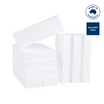
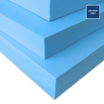
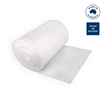


Choosing the best polystyrene foam insulation isn't about finding a single best product; it's about selecting the right foam for the environment it's going into. EPS and XPS both deliver effective thermal performance, but factors like moisture exposure, load requirements, available space and climate conditions determine which option will perform best long-term. This guide breaks down where each type of polystyrene works best, helping homeowners, builders and renovators make a more informed insulation decision.
EPS is the best choice for most roofs, ceilings and wall applications because it offers excellent insulation value at a lower cost. XPS is the better option for under-slab, ground-contact and moisture-prone installations where higher compressive strength and water resistance are required.
Why EPS Works Well for Roof & Ceiling:
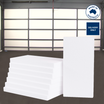
For pitched roofs and ceiling cavities, EPS (Expanded Polystyrene) is usually the practical choice. It's lighter, easier to cut on-site and comes in large sheet sizes that cover ceiling spans without too many joins.
- Thermal performance is solid for above-ceiling use, moisture exposure stays minimal in a properly ventilated roof space
- More cost-effective at larger quantities, which matters since roof insulation typically requires a lot of material
- Easier to cut on-site and available in large sheet sizes
When to Upgrade to XPS:
- Flat concrete roofs or green roof systems where water pooling is a real possibility, that's when XPS justifies the price premium
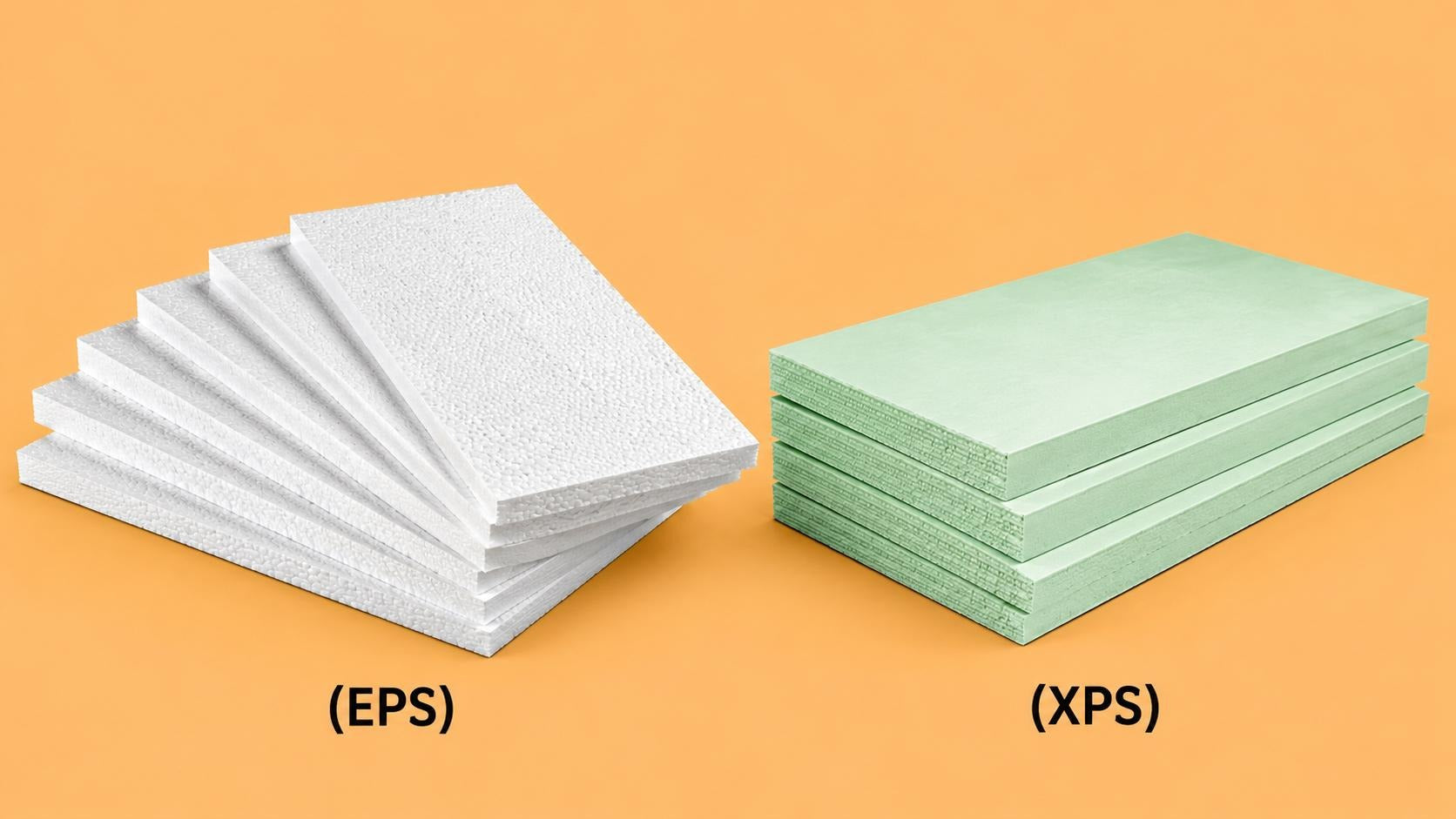
EPS vs XPS: Best Applications by Installation Area
|
Application |
Recommended Foam |
Reason |
|
Roof/Ceiling |
EPS |
Cost-effective, easy to cut |
|
Under-slab |
XPS |
Moisture & load resistance |
|
Walls |
EPS (H/VH grade) |
Breathable, cost-efficient |
|
Garage Doors |
XPS |
Thin, rigid, lightweight |
Through warehouses in Sydney, Melbourne, Brisbane, Adelaide and Perth, we've supplied both residential and commercial insulation projects across a wide range of Australian climate conditions.
EPS vs XPS R-Value Comparison
|
Foam Type |
50mm Thickness |
100mm Thickness |
|
EPS |
Approx. R1.3–R1.5 |
Approx. R2.6–R3.0 |
|
XPS |
Approx. R1.7–R1.8 |
Approx. R3.4–R3.6 |
Actual R-values vary depending on product density and manufacturer specifications.
Why XPS Is the Only Choice for Under-Slab & Ground Contact:
- Under-slab insulation sits in direct contact with soil and moisture, sometimes for decades
- EPS, while closed-cell, can absorb trace moisture over extended periods when fully embedded
- XPS has a denser, more uniform cell structure that resists moisture absorption far better in these conditions
- Higher compressive strength handles the load-bearing pressures that come with concrete pours
Use XPS for any ground-contact application including:
- Slab edges
- Footings
- Subfloor installations
EPS vs XPS for Walls & External Cladding Systems:
- Both EPS and XPS are used in cavity wall systems and external insulation finish systems (EIFS), but they perform differently
- EPS is more breathable, making it suitable where some vapour movement is acceptable or even desirable
- XPS, being denser, is better suited where a vapour barrier effect is needed or where the wall faces significant weather exposure
For Most Australian Residential Walls:
- EPS at the right density grade (H or VH) delivers strong performance in temperate and coastal climates
- No need to overpay for XPS's moisture resistance if your application doesn't actually require it
Garage Doors and Shed Panels: Thin XPS or Foilboard Combination
Garage door insulation panels need to be thin, rigid and lightweight enough not to affect the door's balance mechanism. Both EPS and XPS can be used depending on the application; however, lightweight custom-cut EPS insulation panels, such as InsulDoor kits, are a popular choice for residential garage doors as they provide effective thermal performance without placing unnecessary load on the door system.
For sheds, the choice often comes down to budget and climate zone. In hotter, drier regions, EPS sheeting behind a foilboard layer is a cost-effective combination. In humid coastal environments, XPS performs more consistently over time without degrading.
Final Thoughts
Polystyrene insulation is not a one-size-fits-all decision. The same foam that performs brilliantly in a ceiling cavity can be the wrong call under a concrete slab. Getting it right means thinking about moisture exposure, load requirements, available space and your local climate, not just comparing price tags.
Both EPS and XPS are excellent materials when used in the right application. The mistake most homeowners and builders make is choosing based on cost alone, without accounting for the long-term performance demands of the specific installation zone.
Match the foam to the job. That's how you get insulation that actually works for the life of the building.
Ready to Order the Right Foam for Your Project?
The Foam Company supplies both EPS and XPS polystyrene across Australia, with distribution warehouses in Sydney, Melbourne, Brisbane, Perth and Adelaide. We offer standard sheets, cut-to-size orders and wholesale quantities for commercial projects.
Not sure which grade or thickness suits your application? Contact our team directly; we'll help you spec it correctly the first time so you're not paying for the wrong product.
FAQs
Is EPS or XPS better for insulation in Australian homes?
For most above-ground applications like ceilings, walls and shed panels, EPS is the more cost-effective choice and performs well across Australian climate zones. XPS is recommended where moisture or load-bearing is a concern, such as under slabs or in ground contact.
Can I use polystyrene foam insulation in a garage door?
Yes. XPS in 20–30mm thickness is commonly used for garage door panels due to its rigidity and thin-profile R-value. It's light enough not to affect the door mechanism and holds its shape under panel brackets.
What does R-value mean for polystyrene insulation?
The R-value measures a material's resistance to heat flow. The higher the R-value, the better the insulation performance. XPS generally achieves a higher R-value per millimetre of thickness compared to EPS, which is why it's preferred in space-restricted applications.
Does EPS absorb moisture?
EPS has a closed-cell structure that limits moisture absorption in normal above-ground conditions. However, in prolonged ground contact or submerged applications, XPS is the more moisture-resistant option due to its denser cell structure.
Can polystyrene foam be cut to size for custom insulation projects?
Yes. The Foam Company offers a cut-to-size service for both EPS and XPS. Minimum charge for custom orders is $200 + GST. Contact the team directly for a quote on your project dimensions.





Leave a comment
This site is protected by hCaptcha and the hCaptcha Privacy Policy and Terms of Service apply.