

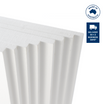
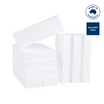
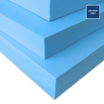
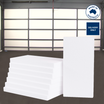


Choosing the wrong insulation foam can cost you hundreds in wasted materials or even lead to moisture damage years down the track. If you're comparing EPS and XPS foam for your project, here's everything you need to know to make the right choice
What Is EPS Foam?
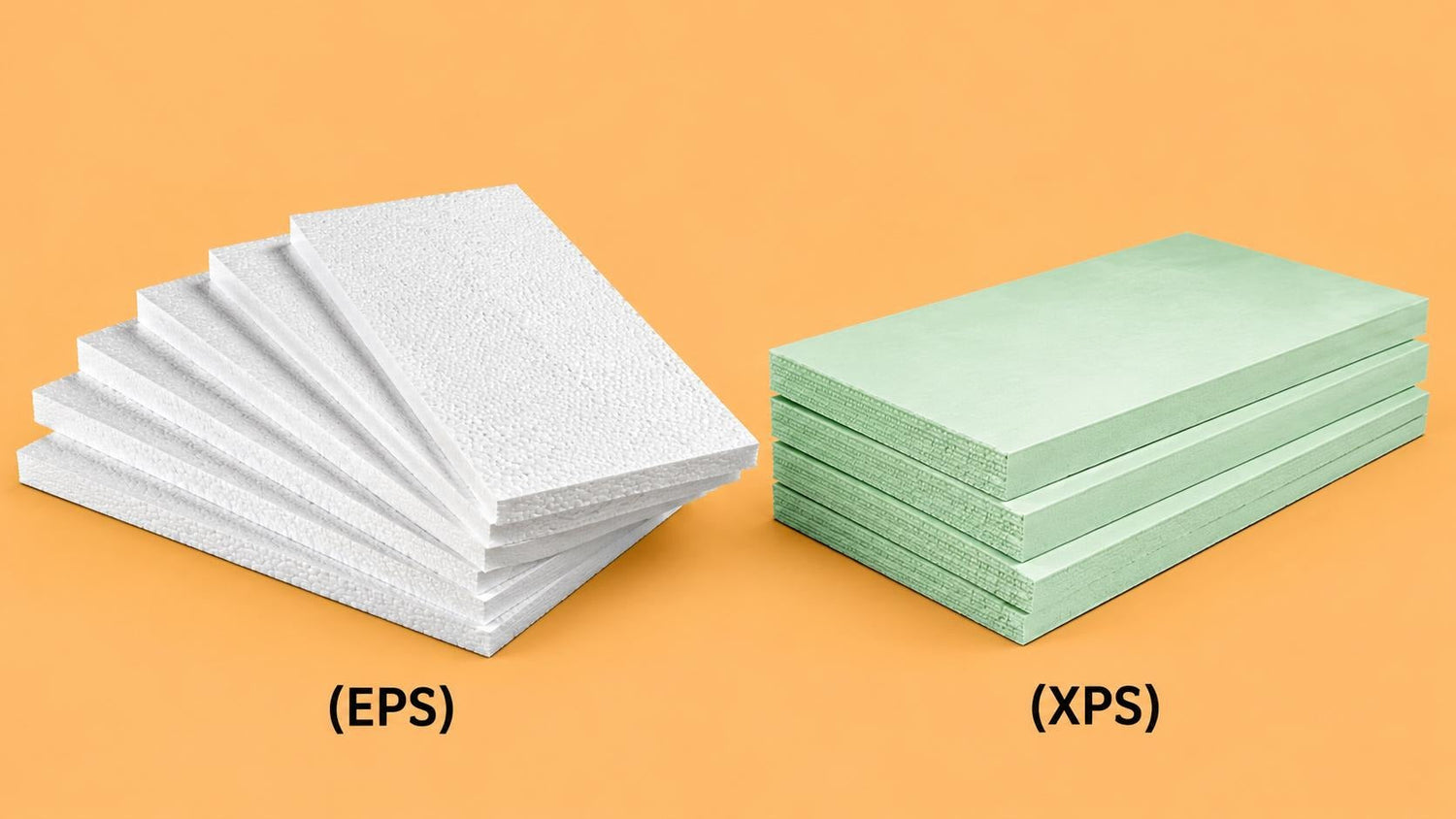
EPS (Expanded Polystyrene) is made by expanding polystyrene beads with steam and moulding them into rigid foam sheets. It's the lightweight, affordable option you'll see in wall insulation, packaging, and DIY projects across Australia.
Available density grades: SL (13.5 kg/m³), M (Medium), H (24-28 kg/m³) and VH (28 kg/m³)
Moisture absorption: Approximately 2% by volume when immersed
Common uses: Wall cavities, ceiling insulation, underfloor insulation, packaging, geofoam, signage
What Is XPS Foam?
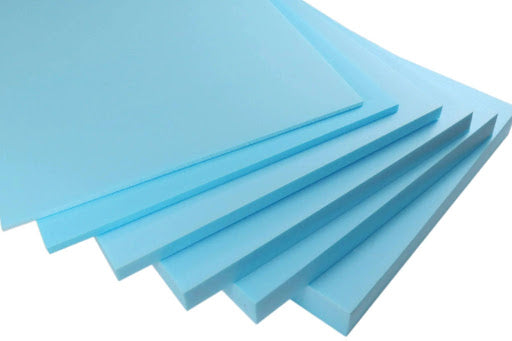
XPS (extruded polystyrene) is manufactured through extrusion, creating a dense closed-cell structure. Think of it as EPS's tougher, more water-resistant cousin – built for demanding applications where moisture and compression matter.
- Density: 32-35 kg/m³
- R-value: 1.0 per 25mm thickness (R4.0 per 100mm)
- Compressive strength: 300 kPa for standard applications, 500 kPa for heavy-duty areas
- Moisture absorption: 0.3% in testing
Common uses: Under-slab insulation, garage floors, cool rooms, basements, high-moisture zones
EPS vs XPS: Quick Comparison
|
Feature |
EPS Foam |
XPS Foam |
|
Density Range |
13.5–28 kg/m³ |
32-35 kg/m³ |
|
Structure |
Bead-based |
Closed-cell |
|
Moisture Absorption |
~2% by volume |
~0.3% |
|
R-Value (per 100mm) |
Varies by density |
R4.0 |
|
Compressive Strength |
Grade-dependent |
300-500 kPa |
|
Cost |
More economical |
Premium pricing |
|
Best For |
Walls, ceilings, general use |
Slabs, wet areas, heavy loads |
The Key Differences That Matter
Moisture Resistance
This is the biggest difference. XPS absorbs only 0.3% moisture in testing compared to EPS's approximate 2% by volume, making XPS ideal for below-grade applications, slabs and high-humidity environments. EPS performs perfectly in standard above-grade applications with proper vapour barriers.
Density and Strength
XPS foam is denser (32-35 kg/m³) compared to EPS's range of 13.5-28 kg/m³. This density difference translates to XPS handling 300-500 kPa compressive loads without deforming – essential for under-slab or load-bearing applications. EPS is available in multiple density grades (SL, M, H, VH) to match different project requirements.
Thermal Performance
XPS typically offers an R-value of 1.0 per 25mm thickness, providing excellent insulation in a thinner profile. EPS provides excellent insulation and retains its properties over time, making it cost-effective for most residential projects.
Which Foam Should You Choose?
Choose EPS if you're insulating:
- Wall cavities and ceilings
- Above-grade applications with vapour barriers
- Large areas where budget matters
- Projects needing custom shapes and profiles
Choose XPS if you're insulating:
- Concrete slabs or garage floors
- Basements or below-grade walls
- Cool rooms or consistently wet environments
- Areas requiring high compressive strength
Pro tip: Most projects use both strategically. Use EPS for general wall and ceiling insulation where it excels, then specify XPS only for garage slabs, cool rooms or below-grade applications where moisture resistance justifies the premium.
Environmental Considerations
EPS can be recycled and is less energy-intensive to manufacture than XPS. The Foam Company recycles all production offcuts. When you order custom-cut foam, you eliminate on-site waste entirely.
Final Thoughts
EPS is lightweight, economical and perfect for general residential insulation across multiple density grades. XPS provides superior moisture resistance and compressive strength for demanding applications. The right choice isn't about which is better. It's about matching the foam specification to your project requirements.
Understanding EPS density grades (SL, M, H, VH) and when to step up to XPS helps you avoid costly mistakes and optimise both performance and budget.
Ready to Order?
Get custom-cut EPS or XPS foam delivered Australia-wide in exact sizes with no waste, same-day despatch from warehouses in Sydney, Melbourne, Brisbane, Perth and Adelaide.
- Shop EPS Foam – Available in SL, M, H and VH density grades
- Shop XPS Foam – 300 kPa and 500 kPa ratings available
- Need help deciding? Call 1800 FOAMCO or request a custom quote
All prices include GST. Expert technical advice available.
FAQs
Is XPS better than EPS?
Not always. XPS excels in moisture-prone environments and load-bearing applications, while EPS is more cost-effective for general insulation. Choose based on your project's moisture exposure and load requirements.
What are the different EPS density grades?
EPS comes in four main grades: SL (Standard Light) at 13.5 kg/m³ for lightweight applications, M (Medium) for general use, H (High) at 24-28 kg/m³ for increased strength and VH (Very High) at 28 kg/m³ for demanding structural needs.
Can I use EPS under a concrete slab?
While possible with proper protection, XPS is ideal for below-grade insulation where moisture resistance is critical, such as foundation walls and under-slab applications.
What compressive strength does XPS offer?
XPS boards are available in 300 kPa for standard applications like walls and roofs and 500 kPa for heavy-duty areas like under slabs or green roofs.





Leave a comment
This site is protected by hCaptcha and the hCaptcha Privacy Policy and Terms of Service apply.