

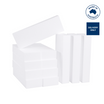
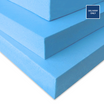
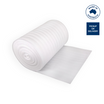
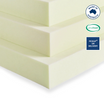


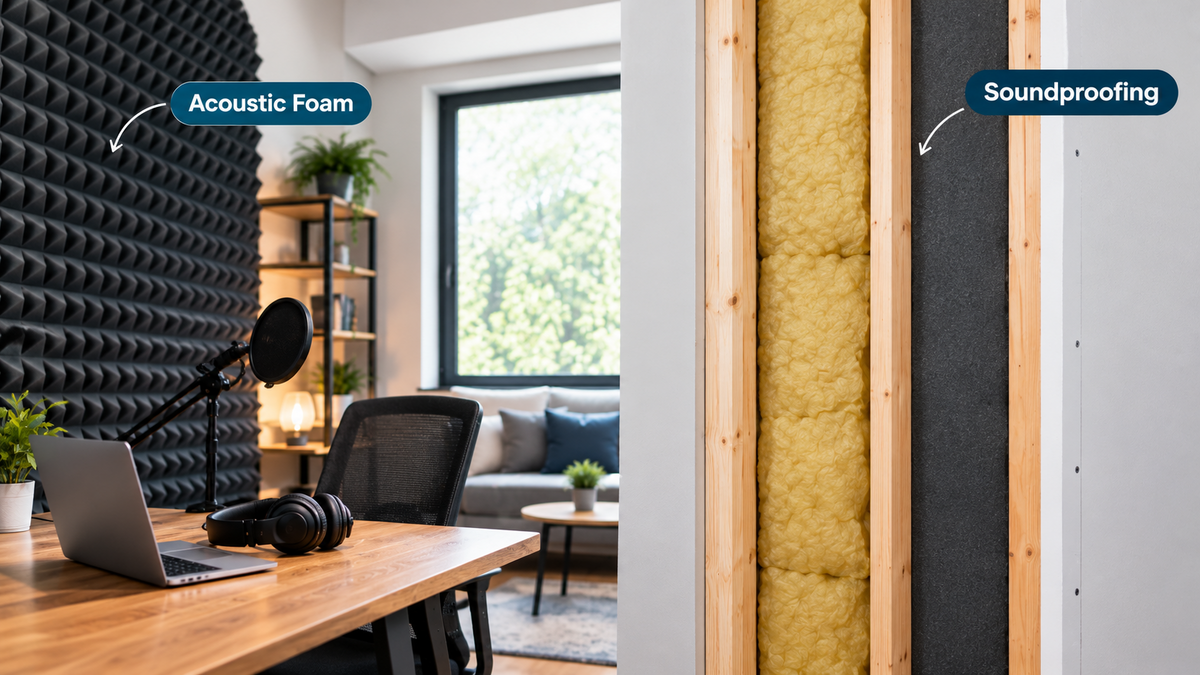
Echo can make conversations difficult to follow, while noise travelling through a shared wall creates a different problem. Acoustic foam panels can help control sound reflections within a room, but reducing noise between spaces requires a different approach.
Understanding the difference between acoustic foam and soundproofing will help you choose the right solution for your space.
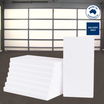
Conversations in a meeting room can be difficult to follow when voices bounce off hard surfaces. At The Foam Company, our Australian-made acoustic foam panels are manufactured from open-cell polyurethane foam and designed to absorb sound reflections, helping reduce echo and reverberation.
But what if you can hear conversations through the wall next door? That's a different problem. Soundproofing involves addressing how noise travels between rooms, rather than simply controlling reflections within a space.
The right solution depends on where the unwanted noise is coming from and what you're trying to reduce.
Acoustic Foam vs Soundproofing: What Changes in Your Room?
Sound bouncing between bare walls reaches your ears after the original sound, making speech less distinct. Open-cell acoustic foam lets sound enter its pores, where friction converts some of that energy into heat. Less sound reflects back into the room.
Does acoustic foam block noise? Lightweight panels absorb some sound energy, but they lack the mass and construction needed to isolate adjoining rooms. The Australian Government's Your Home guidance also explains the difference between controlling sound within a room and reducing noise between spaces.
Acoustic Foam vs Soundproofing: Key Differences
| Feature | Accoustic Foam | Soundproofing |
| Primary purpose | Reduces echo and reverberation within a room | Reduces noise transmission between spaces |
| How it works | Absorbs sound reflections | Uses mass, airtightness, damping and/or structural isolation |
| Installation | Typically installed on exposed walls and ceilings | May involve modifications to walls, floors, ceilings and doors |
| Best suited for | Home theatres, recording studios, meeting rooms and other echo-prone spaces | Reducing noise between adjoining rooms or from external sources |
| Main limitation | Does not effectively block sound through walls | May require more extensive construction work |
In a meeting room, wall and ceiling reflections prolong speech sounds, allowing one word to overlap the next. Acoustic foam panels intercept some of those reflections. Their placement needs to account for the exposed hard surfaces around the table and the ceiling above it. Placing all your panels on one wall may leave other reflective surfaces untreated. The coverage you need depends on the room's size and furnishings.
Tracing Noise Through Walls and Adjoining Rooms
Voices and music make a separating wall vibrate, allowing sound to radiate from its other side. Sound also travels through gaps around doors and along adjoining building elements. Exposed foam leaves these transmission routes largely untreated.
So, does acoustic foam stop sound through walls? Not effectively. The first step is to work out how the noise is travelling:
- Speech audible around a closed door calls for assessment of the door leaf and perimeter seals.
- Music through a shared wall needs assessment of the wall construction, including adjoining floors and ceilings.
- Thuds from upstairs require attention to impact vibration passing through the structure.
If noise is travelling along several paths, an acoustic consultant can help identify the main transmission path. Adding extra layers to a wall won't solve much if sound is still passing through an untreated door or ceiling.
Choosing Between Exposed Panels and Cavity Insulation
Insulation fitted inside a wall absorbs sound within its cavity. The wall linings provide mass, while separated framing or resilient connections reduce vibration transfer. Their combined performance depends on the complete construction and its installation.
When comparing acoustic foam vs soundproof insulation, remember that cavity insulation needs to be installed inside the wall. In an existing room, that usually means opening up the wall. Exposed panels are accessible from the room, so you can adjust their position without opening the wall.
Thermal insulation ratings measure resistance to heat flow, not sound isolation. An R-value alone won't tell you how well a wall blocks noise. If you need both thermal and acoustic insulation, check the performance specifications for each.
Checking Panel Performance for the Sound You Hear
Thin sound absorption foam generally works better on mid- and high-frequency sounds. Low-frequency noise, such as a deep rumble, usually needs a different approach. A wedge or pyramid profile alone does not establish the useful frequency range.
An absorption test report shows how a material performs at different frequencies. For products described as soundproofing foam, that report is useful for assessing echo control. A transmission test of the complete wall or building element is needed to assess isolation.
When checking test results, look at the panel thickness and how it was mounted during testing. A thinner panel may perform differently, and an overall absorption rating won't tell you how well the foam handles individual frequencies.
Still unsure about acoustic foam vs soundproofing? Contact The Foam Company to discuss your noise concerns and find out whether acoustic foam panels are suitable for your space.





Leave a comment
This site is protected by hCaptcha and the hCaptcha Privacy Policy and Terms of Service apply.