

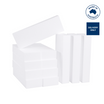

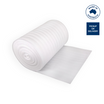
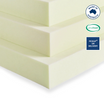
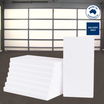


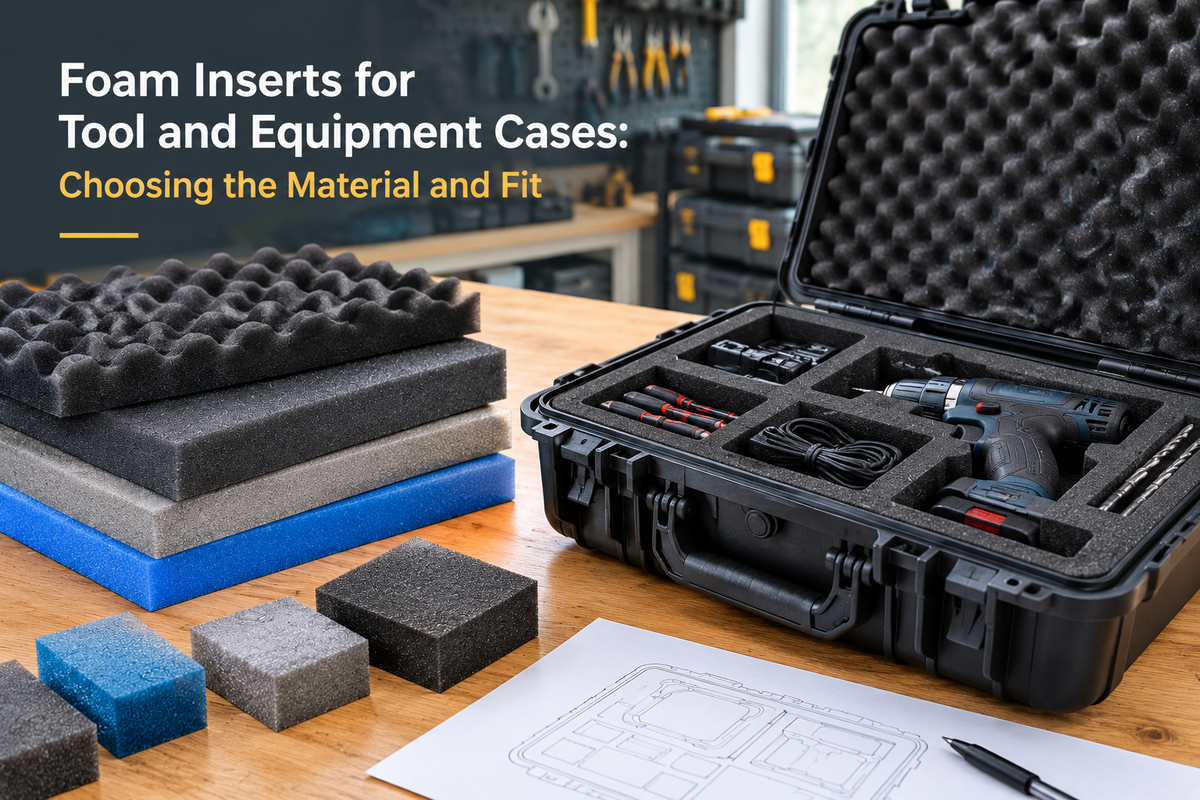
Choosing the right foam inserts for tool cases starts with getting the measurements right. Your tools need enough cushioning to stay protected, but they should also be easy to remove. This guide explains how to compare PE and EVA foam, measure your case and plan custom inserts that suit your equipment.
A socket set stored in a workshop drawer needs enough space around each tool for easy access, while delicate measuring instruments transported between sites require cushioning to protect them from movement and impact. At The Foam Company, we supply PE and EVA foam in various grades and thicknesses, making them suitable for a range of protective packaging and equipment storage applications. Contact our team to discuss suitable foam materials, dimensions and custom-cutting options for your requirements.
Supporting Heavy Tools Inside the Case
A heavy tool presses further into foam when its weight rests on a narrow edge. If it squeezes the foam flat during a knock or drop, the hard case underneath offers little cushioning. Supporting the tool across a wider part of its body spreads that pressure.
The Canadian Conservation Institute’s packaging guidance considers the item’s weight and the area of foam supporting it when selecting suitable cushioning. For your equipment case foam, the supporting area is the part touching the item, which may be smaller than its full outline. Include the weight of each item when you send through its measurements.
Choosing PE or EVA Foam for Your Tools
PE foam inserts resist water absorption because polyethylene foam has a closed-cell structure. Closed-cell EVA is another option, but both materials come in grades that differ in firmness and flexibility. The material name on its own does not tell you how tightly an insert will hold a tool.
When comparing PE and EVA foam for tools, check how easily each grade compresses and how well it returns to its original shape. Foam that stays flattened after repeated use leaves a gap around the equipment. A density figure tells you how much the foam weighs per cubic metre, rather than how it will feel when compressed.
The best foam for equipment cases also needs to suit the space beneath and around your equipment. Include details of oils or cleaning products that touch your tools when requesting a quote, so the foam’s suitability for that contact can be checked.
For a closer look at the materials, see our guide to choosing between PE and EVA foam.
How to Measure Custom Foam Case Inserts
Measure inside the case where the foam will sit. Moulded walls can slope inward, and the space near the bottom may be narrower than the opening. Here is how to measure custom foam case inserts:
- Measure the internal length and width, noting rounded corners and anything projecting from the walls.
- Record the depth of the base and lid separately, allowing for ribs and hinges.
- Measure tools with their batteries fitted. Include any guards or connectors that stay attached during storage.
- Record the required dimensions and depths of any cut-outs, ensuring sufficient foam remains underneath to support and cushion the equipment.
- Leave room for your fingers beside items that sit below the foam’s surface.
Arrange the items on a full-size paper template to check their positioning and ensure there is enough space to remove each tool comfortably. For custom foam inserts requiring different cut-outs, shapes or profiles, provide detailed measurements and specifications to help ensure the foam suits your equipment.
Leaving Space to Remove Tools and Close the Lid
When planning tool drawer foam, allow sufficient space between cut-outs so tools can be removed easily without damaging the surrounding foam. Avoid excessively narrow sections between cut-outs, as these may be more prone to tearing during repeated use. Contrasting foam colours can also make it easier to identify missing tools and keep equipment organised.
In a carry case, let the foam hold the main body of the equipment, with clearance around switches and fragile fittings. Check where the lid lining presses when the case closes. For delicate instruments, use the manufacturer’s transport requirements to establish how much cushioning is needed.
Looking for foam inserts for tool cases? Contact The Foam Company to discuss our PE and EVA foam range, custom-cutting options and suitable materials for protecting and organising your equipment.





Leave a comment
This site is protected by hCaptcha and the hCaptcha Privacy Policy and Terms of Service apply.