

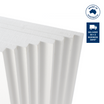
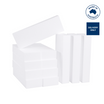
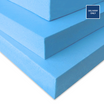
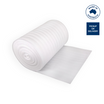
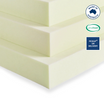
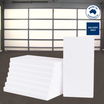
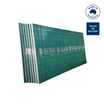


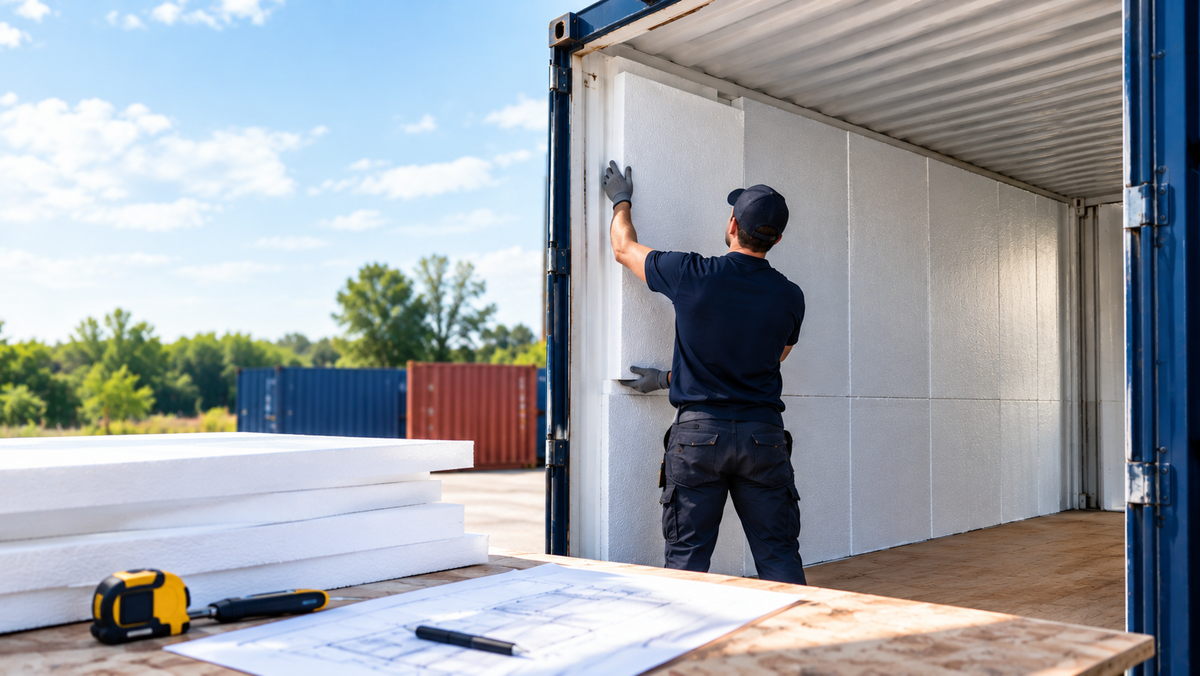
Lining a shipping container takes up internal space, so the thickness available for insulation depends on what needs to fit inside. Shipping container insulation also needs careful detailing where boards meet steel framing. The Foam Company offers EPS and XPS sheets with different thermal properties. Choosing the right thickness means balancing insulation performance with the space needed for framing and lining.
Shipping containers used for storing machinery or as workshops can experience significant temperature fluctuations due to their steel construction. Shipping container insulation helps reduce heat transfer through the container's walls and roof, although additional cooling may still be necessary during prolonged hot weather. At The Foam Company, our cut-to-size EPS sheets can be ordered to suit your framing layout and insulation requirements. Choosing the right foam board and thickness is essential for balancing thermal performance, available internal space and installation requirements.
Choosing EPS or XPS for the Available Wall Depth
R-value measures resistance to heat flow. A higher figure means greater resistance, but the stated value applies to the product at its specified thickness.
For EPS container insulation, our technical data sheet lists a minimum R-value of 1.13 for 50 mm SL-grade EPS. Our XPS foam board technical data sheet reports an R-value of 1.74 at the same thickness. These values provide an indication of each material's thermal resistance, although differences in testing methods and temperatures should be considered when comparing performance. The EPS value is specified at a mean temperature of 25°C, while the XPS value was tested at 23°C.
For more detailed information on material properties, thermal resistance and product specifications, refer to our EPS and XPS Technical Data Sheets.
Choosing the best foam board for your container walls also means allowing room for framing and protective lining alongside the rigid foam insulation. For example, a wall built out by 75 mm on each side removes 150 mm from the usable width. That affects shelving depths and the machinery you can accommodate.
Fitting Boards Around Corrugations and Steel Framing
When rigid foam boards are installed directly against corrugated steel walls, gaps may remain between the boards and the recessed sections of the corrugations. These areas need to be considered as part of the overall insulation and air-sealing design to minimise unwanted air movement and potential condensation risks.
Steel framing that crosses the insulation conducts heat around the boards. A continuous insulation layer over framing reduces this thermal bridge; boards fitted only between metal members leave that route open. At roof junctions and door openings, exposed metal interrupts that coverage.
Before ordering container insulation panels, your measurements need to include:
- Wall dimensions and the position of framing members.
- Corrugation depth and the proposed finished lining position.
- Clearance for door hardware and the full door swing.
- Openings and service penetrations requiring cuts and seals.
Where boards form the air barrier, compatible joint tape and perimeter seals join them into a continuous layer that blocks air movement, including at corners.
What Causes Condensation Behind the Lining?
Condensation forms when moisture in the air comes into contact with steel that's cold enough for water droplets to develop. Inside a lined container, droplets can collect out of sight behind the boards. A moisture-resistant board does not stop air entering through an unsealed edge.
The Australian Government's Your Home condensation guidance explains that air leakage can carry water vapour into building cavities. Sealing those leakage paths is therefore part of insulation and condensation control in your container. Wet equipment adds moisture as it dries. In humid weather, outdoor air may add moisture too, so ventilation alone does not always lower indoor humidity; dehumidification removes moisture from the air.
If you are planning how to insulate a shipping container in Australia, local weather and the use of heating or cooling affect moisture control. In cold weather, indoor moisture can reach the cold shell. In humid climates, air conditioning creates cold surfaces that need protection from humid outdoor air. A designer needs to specify membrane position and vapour resistance for those conditions, accounting for the steel shell’s limited ability to let moisture dry outwards.
Preparing the Container for Lining
Leaks and corrosion need repair before insulation conceals the steel. Adhesives must suit both polystyrene and the container’s coated surface; solvent-based products can attack the foam. As polystyrene is combustible, any proposed insulation system should be assessed against the relevant fire safety and building requirements. Suitable protective linings may also be required, depending on the container's intended use and applicable regulations.
Need help choosing shipping container insulation? Contact The Foam Company to discuss EPS and XPS foam board options for your project.





Leave a comment
This site is protected by hCaptcha and the hCaptcha Privacy Policy and Terms of Service apply.