

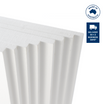
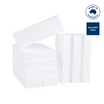
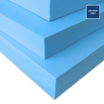
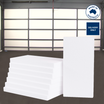


Heat moves through walls, roofs and sheds at different rates, so insulation thickness directly affects thermal comfort and energy use. Selecting foam board insulation depends on the required R-value, available installation space and the building application. At The Foam Company, we supply and cut insulation products across Australia, where selecting the correct board thickness influences long-term performance. Understanding these differences makes it easier to select the right product before installation.
Wall cavities, shed frames and garage linings all limit how much insulation can physically fit inside the structure. Choosing foam board insulation from The Foam Company therefore involves more than selecting a material. Board thickness changes the level of thermal resistance, influences the overall R-value, and determines how much heat passes through the building envelope. Selecting the right thickness at the beginning reduces the likelihood of replacing insulation later because the original specification no longer meets the intended use.
How Thickness Affects Foam Board Insulation
Heat naturally moves from warmer areas towards cooler ones. Insulation slows that movement by creating resistance to heat flow, with thicker boards generally providing greater insulating performance than thinner boards manufactured from the same material.
That does not mean the thickest product is always the correct choice. Available framing depth, roof construction, wall cavities and finished floor levels all place practical limits on insulation thickness. Installing a board that is too thick may interfere with cladding, plasterboard or internal finishes, while a board that is too thin may not achieve the required thermal performance.
For this reason, foam insulation board products are normally selected by balancing available installation depth with the target R-value required for the application.
Common Foam Board Thicknesses
Different projects call for different insulation depths because the purpose of the building affects heat transfer requirements.
Typical examples include:
- 25mm foam board insulation where installation depth is limited or additional thermal resistance is required over an existing structure.
- 50mm foam insulation board for many wall, roof and general construction applications requiring greater insulating performance.
- Thicker insulation board products where higher thermal resistance is needed for specialised commercial or residential projects.
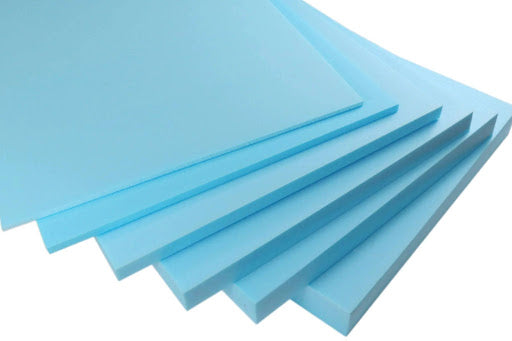
Both EPS board and XPS board products are available in multiple thicknesses, allowing insulation to be matched to the building rather than forcing the building to suit the insulation.
Foam Thickness for Different Applications
The right thickness depends on where the insulation will be installed and how much space is available. A wall cavity has different dimensional limits from a garage door or shed roof, so the insulation should match both the structure and the desired thermal outcome.
As a general guide:
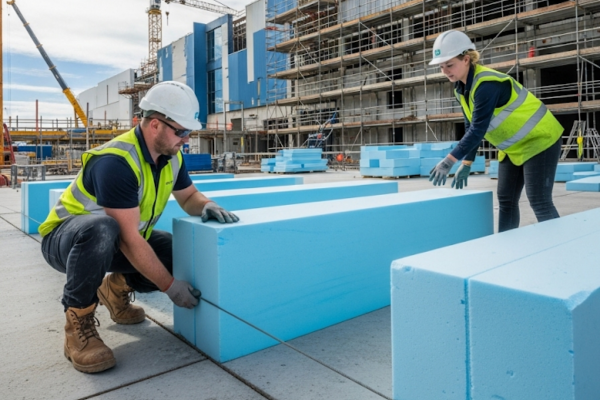
- Foam board insulation for walls commonly uses thicker boards where framing depth allows greater insulation values.
- Foam board insulation for sheds balances thermal performance with available framing space so internal wall linings still fit correctly.
- Garage and roof applications frequently require a thickness that maintains clearance around moving parts, roof members or fixings.
- Projects with restricted cavity depth may benefit from 25mm foam board insulation, while deeper cavities often accommodate 50mm foam insulation board or thicker products.
Selecting thickness around the building rather than simply choosing the thickest product produces a more practical installation and avoids unnecessary alterations during construction or renovation.
EPS Versus XPS Foam Boards
Although both products are rigid foam insulation, they perform differently under specific conditions. Polystyrene insulation board manufactured as EPS contains closed cells that provide reliable insulation while remaining lightweight and economical for many residential and commercial projects. XPS uses a different manufacturing process that creates a denser closed-cell structure with higher compressive strength and greater moisture resistance.
If your project involves regular foot traffic, high loading or areas exposed to moisture, an XPS foam board may be the better option. For wall linings, general building insulation and many retrofit applications, an EPS board frequently provides an effective balance between insulation performance and project cost. The required R-value, structural loading and installation environment should all be assessed before selecting either material. For detailed product specifications, including R-values and technical data, view The Foam Company's technical data sheets to compare the available EPS and XPS products.
The Australian Government's guidance on improving household energy efficiency also identifies insulation as one of the most effective ways to reduce unwanted heat transfer throughout a building.
Selecting the Right Board for Your Project
No single insulation thickness suits every application. A detached shed, internal garage wall and external cavity wall each experience different heat loads, structural requirements and installation constraints.
We stock a wide range of foam board, foam insulation board, insulation board, polystyrene insulation board and XPS foam board products for residential, commercial and industrial applications across Australia. We also cut many insulation products to your required dimensions, making it easier to install rigid insulation where standard sheet sizes are unsuitable. Whether you require a board for walls, roofs, garages or another application, selecting the correct thickness from the outset improves long-term thermal performance and reduces unnecessary modifications during installation.
Contact The Foam Company to discuss your foam board insulation requirements.




Leave a comment
This site is protected by hCaptcha and the hCaptcha Privacy Policy and Terms of Service apply.