



Cold air entering through the subfloor affects indoor comfort, energy use and the long-term performance of your flooring. Material selection determines how well underfloor insulation reduces heat loss under different conditions. Across Australian homes, The Foam Company sees how different insulation materials perform in real applications. Understanding how those materials behave makes the right choice much clearer.
A timber floor sitting above an uninsulated subfloor loses heat every day during cooler weather. That constant heat loss leaves rooms colder underfoot, increases heating demand and allows draughts to circulate through gaps beneath the floor structure. Selecting the right underfloor insulation depends on more than simply adding another building product. The insulation material needs to suit the construction of the floor, the moisture conditions beneath the home and the level of thermal performance required throughout the year.
A Variety of Underfloor Insulation Materials
Different insulation materials perform differently once they are installed beneath a floor. Some compress over time, some absorb moisture and others retain their insulating properties for decades. That is why comparing foam underfloor insulation vs fibreglass involves more than looking at purchase price alone.
Rigid foam products retain their shape after installation because they do not slump between joists. Closed-cell materials also resist water absorption, helping preserve their insulating properties where humidity or ground moisture is present. Fibreglass batts rely on trapped air within the fibres to slow heat transfer, but compression or moisture reduces their effectiveness.
When comparing common products, several practical differences become apparent:
- Rigid foam panels maintain their thickness and insulating performance after installation.
- Fibreglass batts lose efficiency if they become compressed or damp.
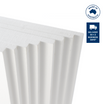
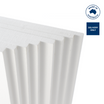
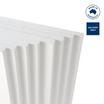
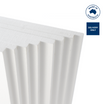
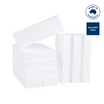
- Polystyrene underfloor insulation panels remain lightweight while resisting moisture.
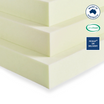
- Closed-cell underfloor insulation foam contributes to long-term draught reduction beneath suspended floors.
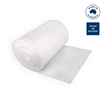
- Foam products are well suited to many retrofit insulation projects because they can be cut accurately around existing floor framing.
Foam Performance Under Timber Floors
Many Australian homes are built on raised timber flooring with accessible subfloor spaces. Those homes benefit from insulation that remains securely fixed between floor joists without sagging over time. Existing services beneath the floor also influence product selection. Plumbing, electrical wiring and ventilation openings require insulation panels to fit accurately without restricting future maintenance access.
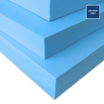
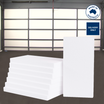
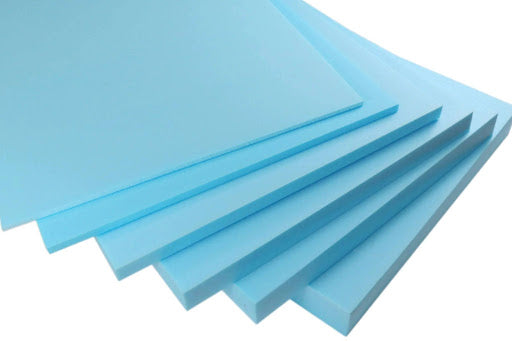
Rigid expanded polystyrene (EPS) and extruded polystyrene (XPS) panels combine high R-value performance with low water absorption because of their closed-cell construction. The Foam Company supplies both EPS and XPS insulation products, with cut-to-size options available for a wide range of construction applications throughout Australia.
The Best Underfloor Insulation for Australian Homes
The best underfloor insulation for Australian homes depends on how the house is built and the conditions beneath it. A suspended timber floor benefits from insulation that fills the cavity without creating gaps where air can circulate. Homes in damp coastal regions also require products with strong moisture resistance so the insulation continues performing throughout changing seasons.
Rigid foam insulation is commonly selected where long-term dimensional stability is important. Unlike soft materials that can settle or sag, foam underfloor insulation maintains consistent contact with the underside of the floor, preserving its insulating performance across the entire installation.
If you are comparing products, consider:
- The required R-value for your climate zone.
- The amount of airflow beneath the home.
- Exposure to ground moisture.
- The accessibility of the subfloor for installation.
- Whether the project involves new construction or retrofit insulation.
These factors influence both energy efficiency and how effectively the insulation performs over the life of the building.
EPS and XPS for Underfloor Applications
Both EPS and XPS are widely used for floor insulation, although each has characteristics suited to different environments.
Expanded polystyrene (EPS) delivers excellent thermal insulation while remaining lightweight and economical. Extruded polystyrene (XPS) has a denser closed-cell structure that provides higher compressive strength and increased resistance to water absorption, making it suitable where prolonged exposure to moisture is expected. The Foam Company supplies both EPS and XPS products Australia-wide, with cut-to-size services available for construction and insulation projects requiring accurate panel dimensions.
Whether you are installing polystyrene underfloor insulation, specifying underfloor insulation for timber floors, or improving underfloor insulation for cold floors, selecting the appropriate foam product helps maintain consistent thermal performance beneath the home.
Discuss your underfloor insulation requirements with The Foam Company.





Leave a comment
This site is protected by hCaptcha and the hCaptcha Privacy Policy and Terms of Service apply.