

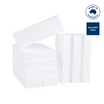
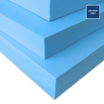



Product weight, carton movement and surface finish all affect how fragile goods handle freight. The right packaging foam needs to cushion impact, reduce vibration and stop internal movement. Poor foam selection leaves polished surfaces, corners and delicate components vulnerable during handling. When your job calls for protective foam packaging, product size and material choice should direct the order placed with The Foam Company.
A fragile item needs cushioning space around it, and that space needs the right foam to protect the product inside the carton. Glass, ceramics, electronics and polished surfaces are at risk in different ways during transport. A hard corner chips when force concentrates in one place, while a glossy finish scratches when the surface rubs against abrasive packaging. The right packing foam separates the item from the carton wall and absorbs movement through the foam layer.
Packaging Foam for Product Weight and Fragility
A light decorative item does not place the same load on foam as a heavy appliance part or industrial component. If the product is too heavy for the foam density, the material compresses flat and leaves very little cushioning between the item and the carton. During handling, drops or impacts transfer more force through the packaging system and into the product itself. If the foam is too firm for a delicate item, the shock travels through the foam instead of being absorbed.
The thickness alone does not determine the protection needs of packaging foam for commercial shipping. A heavy item and a delicate item can require completely different cushioning materials even when they travel in cartons of similar size, because the force transferred into the product changes with weight, shape and fragility. This is reflected in ASTM packaging standards, which include cushioning, vibration and drop-testing methods.
The useful starting points are practical:
- Product weight determines how much compression the foam must handle.
- Surface finish determines whether the foam needs to be soft and non-abrasive.
- Product shape determines whether sheets, wrap or custom inserts will hold it securely.
- Freight distance determines how much vibration and handling the package must tolerate.
The best foam for fragile item packaging is the foam that compresses enough to absorb impact without collapsing under the product.
PE, EPE and PU Foam Choices
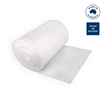
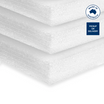
The difference between PE vs PU foam packaging relates to whether the product needs firm support or softer cushioning. Closed-cell polyethylene foams, including PE, EPE, IXPE and EVA, resist moisture and handle impact well. If you need to protect polished surfaces, furniture components or fragile products during transport, an EPE foam wrap provides a lightweight cushioning layer that is water-resistant, flexible, non-abrasive and recyclable.
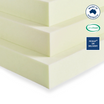
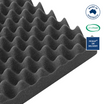
Flexible polyurethane foam works differently because its open-cell structure feels softer and more compressible. That softness suits products that need cushioning and vibration dampening rather than a firmer closed-cell barrier. For polished, delicate or irregular products, softer foam sheets for packaging sit against the surface without creating a harsh contact point.
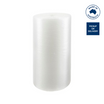
Bubble wrap still has an important role in protecting products that need lightweight wrapping and void fill. Available in both 10 mm and 20 mm bubble diameters, it absorbs shock, conforms easily around awkward shapes and helps fill empty spaces to reduce movement during transport. The Foam Company stocks the following configurations:
- 10mm Bubble x 1500mm x 100m
- 10mm Bubble x 750mm x 100m (Pack of 2)
- 10mm Bubble x 500mm x 100m (Pack of 3)
- 10mm Bubble x 375mm x 100m (Pack of 4)
- 20mm Bubble x 1500mm x 100m
- 20mm Bubble x 750mm x 100m (Pack of 2)
- 20mm Bubble x 500mm x 100m (Pack of 3)
- 20mm Bubble x 375mm x 100m (Pack of 4)
Foam Sheets, Wrap and Custom Inserts Comparison
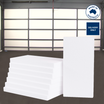
Flat packaging foam sheets suit products with broad faces, straight edges or stacked layers:
- A sheet between ceramic pieces stops surface contact.
- A sheet lining the base of a carton absorbs the first impact when the box is placed down.
- Sheets also work as side protection when the carton has enough clearance around the product.
Roll foam wraps around awkward shapes and protects polished or finished surfaces from rubbing inside the carton. That matters for furniture pieces, display items and products with coated finishes. The soft texture prevents surface marking while the closed-cell structure cushions knocks.
Foam inserts for product packaging suit repeated packing jobs, especially where the same product ships in volume. A cut insert holds the item in one position, keeps corners away from the carton wall and reduces the need for loose fill. By ordering custom-cut foam profiles, products with complex shapes receive better protection while reducing packaging waste.
Commercial Shipping and Order Practicalities
Foam packaging for shipping fragile products has to match the way the goods leave your premises. Single residential parcels need simple sheet, roll or bubble wrap protection. Repeated dispatch work needs a more consistent setup, because staff pack faster when the foam size, carton size and item position stay the same.
For packaging foam for commercial shipping, stock access and cutting requirements affect the order as much as the foam type. As a supplier of polystyrene, polyethylene, polyurethane, bubble wrap, polyfoam and other products across Australia, our team is experienced in handling commercial and wholesale quantities for project orders.
Order standard or custom-cut packaging foam from The Foam Company for reliable protection during storage and transport.





Leave a comment
This site is protected by hCaptcha and the hCaptcha Privacy Policy and Terms of Service apply.