

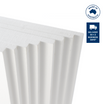



The load placed on foam during use sets the physical requirement for the material. Comparing PE foam vs EVA foam means accounting for compression behaviour, flexibility and recovery within a closed-cell structure. A packaging insert, reusable pad or flotation component therefore requires its own combination of material properties and dimensions. When sourcing foam through The Foam Company, the intended application provides the basis for comparing the available foam types.
A protective insert holding equipment during freight experiences a different load from padding compressed repeatedly during use. Both applications need cushioning, but the foam has to behave differently when force is applied and removed. When comparing PE foam vs EVA foam, start with what the material needs to withstand rather than choosing based on the material name alone. That requirement gives the comparison a practical starting point.
PE Foam vs EVA Foam
The difference between PE and EVA foam goes beyond one being firmer or more flexible than the other. Both belong to the closed cell foam family, and the finished behaviour also depends on formulation, density, grade and thickness. PE foam is available in different forms, including EPE and cross-linked IXPE, while EVA foam is produced in grades with different physical properties.
For polyethylene foam vs EVA foam, the useful comparison is the response required in service. A part that needs greater flexibility or recovery after compression places different demands on the material from a protective layer designed to resist impact. That is why an EVA vs polyethylene foam decision needs to include the actual grade rather than treating either material family as one fixed specification.
Compression, Recovery and Density
Density describes the amount of material within a given volume; it does not tell you firmness by itself. Firmness describes resistance to compression, while resilience and rebound concern the foam's recovery after force is removed. Research into closed-cell EVA confirms that density and loading conditions affect compression and energy absorption behaviour.
If you are deciding which closed-cell foam to use, match the specification to the conditions the foam will experience:
- Identify the load or impact the foam receives.
- Establish how frequently the material will be compressed.
- Specify the flexibility and recovery required after loading.
- Account for water resistance where moisture or flotation is involved.
- Match thickness and dimensions to the available space.
Thickness also affects the available compression distance. A thin foam layer carrying a concentrated load has less material available to absorb deformation, so thickness needs to be considered alongside density and firmness rather than specified independently.
Packaging and Impact Protection
Goods in transit receive vibration, knocks and compression as cartons are handled and transported. When comparing PE vs EVA foam for packaging, the product weight, fragility, surface finish and expected handling determine the required shock absorption and impact protection.
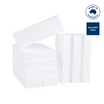
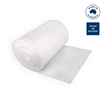
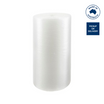
Our EPE is a lightweight expanded polyethylene with a closed-cell structure used for protective cushioning and general packaging. EPE rolls also provide non-abrasive surface protection for polished or fragile goods. Polyethylene foam sheets suit applications requiring sheet-form protection, while rolls work around products or across larger surfaces. This distinction is useful because PE describes a material family, not one packaging product.
Padding, Marine and Automotive Applications
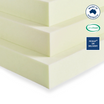
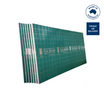
Repeated compression changes the selection criteria for PE vs EVA foam for padding. EVA foam sheets are used where cushioning, flexibility and repeated contact are part of the job, including gym and exercise applications. The required firmness still depends on the load and feel needed from the finished pad.
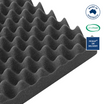
Moisture introduces another physical requirement. In marine applications, suitable closed-cell PE and EVA products may be used for buoyancy, flotation and cushioning applications. Automotive applications can require vibration dampening or insulation; Our IXPE range is a cross-linked polyethylene option suitable for applications including thermal and acoustic insulation. The exposure conditions still need to suit the selected foam, particularly around heat.
Foam Specification and Cut Size
Once you have chosen between polyethylene and EVA, the grade and dimensions remain part of the specification. A foam that is too firm, too soft or incorrectly sized changes how the component compresses, protects or fits during use.
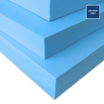
We supply PE, EPE, IXPE and EVA products in sheets and rolls, with custom cutting available for specific shapes and sizes. Choosing EVA foam sheets or polyethylene foam sheets comes down to the complete application requirements, including physical demands, foam behaviour, grade and final dimensions.
Contact The Foam Company to find the right PE or EVA foam for your application.



Leave a comment
This site is protected by hCaptcha and the hCaptcha Privacy Policy and Terms of Service apply.