

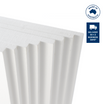
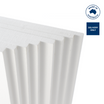
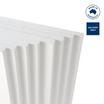
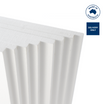






A foam can float and still be the wrong choice for a particular boat installation. Required buoyancy depends on the vessel and its loading, while the material must continue performing where it is installed. The Foam Company supplies marine foam products for a range of flotation and marine applications. Choosing the right product starts with the flotation requirement, with material type, installed volume and exposure considered from there.
Two foam products can both float in water without being interchangeable inside a boat. Marine foam has to perform as part of a flotation arrangement, where the vessel determines the required reserve buoyancy and the installation conditions determine what the material will encounter in service.
At The Foam Company, we supply marine flotation products for a range of boating applications, but choosing between them starts with a different question from “Which foam floats best?” The useful question is: what does the foam need to do in this vessel?
How Boat Flotation Foam Creates Buoyancy
Foam contributes flotation by displacing water while adding relatively little mass of its own. The usable volume of boat flotation foam therefore affects the amount of buoyancy available from the installation. Where boat buoyancy foam has to fit into restricted cavities, the dimensions of those spaces place a physical limit on the volume you can install.
The vessel’s design, loading and applicable flotation requirements will influence the amount of reserve buoyancy required.
Why Closed-Cell Foam Is Used for Boat Flotation
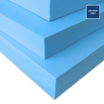
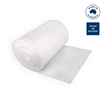
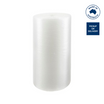
The sealed cellular structure restricts water movement through the material, which makes closed-cell foam suitable for applications exposed to a marine environment. Our marine and automotive range includes EPE, PE foam and EVA foam products used for marine buoyancy and flotation.
The term closed-cell marine foam still covers materials with different densities and physical properties. EPE can be suitable for marine buoyancy applications; however, prolonged exposure can result in some moisture uptake. For installations requiring greater long-term water resistance, PE or EVA may be more appropriate depending on the application.
What Conditions Will the Foam Need to Handle?
Foam sealed inside a protected hull cavity faces different exposure from material installed near bilge moisture, oils or fuel. Abrasion and repeated compression also place physical demands on the foam. When specifying foam for boats, check the conditions at the installation point:
- Confirm the volume available for the required flotation.
- Check water exposure and moisture resistance for the intended service period.
- Confirm fuel resistance and chemical compatibility for the exact foam grade where exposure is possible.
- Account for physical loading, abrasion and the method used to retain the foam inside the hull.
- Measure the cavity for the sheet, block or profile dimensions required.
The same checks apply when replacing damaged marine buoyancy foam during a repair or refit. Matching the dimensions of the material being removed only reproduces the existing installation. The vessel's present configuration, load and flotation requirements still need to govern the replacement specification.
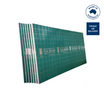
Material compatibility is particularly important where fibreglass resins are involved. The Foam Company's rigid polyurethane (PUR) foam is specifically identified for applications where solvent-based fibreglass resins are applied directly to the foam.
How Hull Space Affects Flotation Foam Volume
Limited cavity space is particularly relevant when specifying foam for aluminium boat flotation. Filling an available void with foam cannot produce buoyancy beyond the volume of water that the installed foam displaces.
If the required flotation needs more foam than the available cavities can hold, the flotation arrangement will need to allow for sufficient foam volume elsewhere within the hull design.
Australian Flotation Requirements
Reserve buoyancy forms part of the safety requirements covered by AS 1799.1:2025, Small craft, Part 1: Essential safety requirements for power boats. Standards Australia identifies reserve buoyancy alongside maximum load, persons and power capacities, stability and other safety requirements for powered craft up to 15 metres.
A particular foam product does not by itself demonstrate that a vessel meets the applicable requirement. The craft, its use and its design determine the requirements that apply, with the flotation material selected as part of that vessel specification.
How to Choose Marine Flotation Foam for Your Boat
The location of the foam, the available dimensions and the conditions it will face give us the information we need to narrow down the suitable products. We supply a range of marine flotation foam products in Australia, including closed-cell PE, EPE and EVA products in various formats.
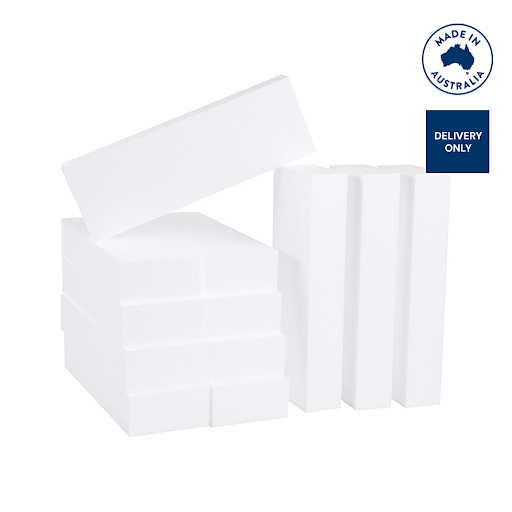
For suitable applications, cut-to-size EPS is also available for marine buoyancy uses.
If you want to know what foam is used for boat buoyancy, the material family alone will not give you the answer. The best foam for boat flotation is the grade and format suited to the particular installation.
Not sure which marine foam suits your vessel and installation? Find the right marine foam for your application with help from The Foam Company team.




Leave a comment
This site is protected by hCaptcha and the hCaptcha Privacy Policy and Terms of Service apply.